






IKT International Conference 2026: How AI, Drones, Sensors and Robotics are Transforming Sewer Operations – and What Network Operators Should Prepare For
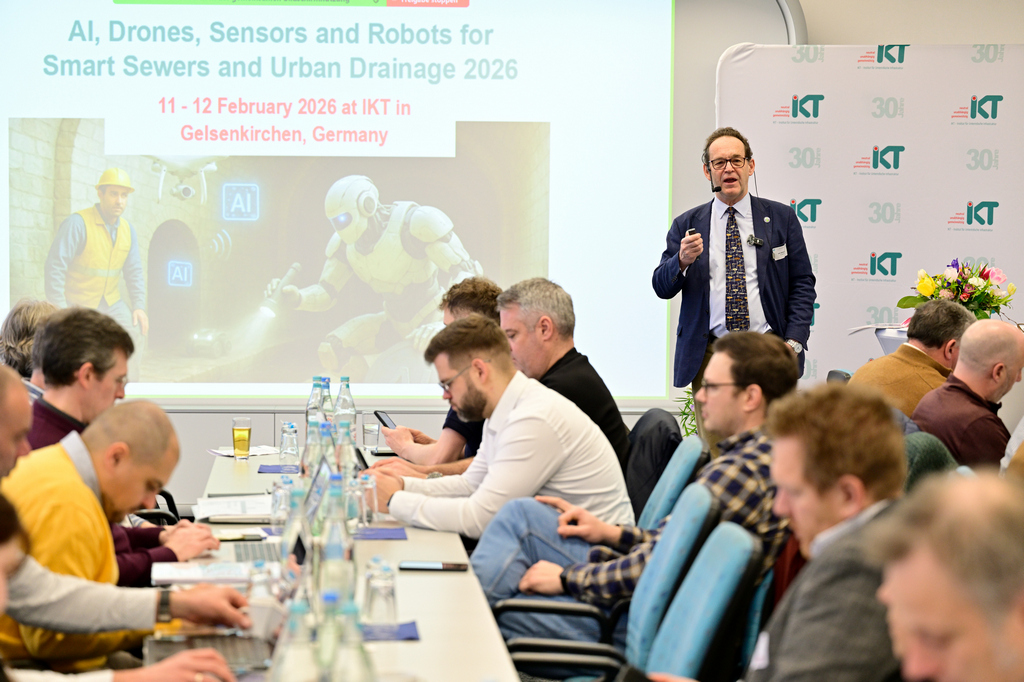
Dr Iain Naismith chairs the international IKT conference ‘AI, Drones, Sensors and Robots for Smart Sewers and Urban Drainage 2026’
On 11 and 12 February 2026, experts met at IKT for our second international conference “AI, Drones, Sensors and Robots for Smart Sewers and Urban Drainage”. The focus was on cutting-edge technologies and the latest research findings for sewer operation.
Drones in sewers: precise 3D models and greater occupational safety
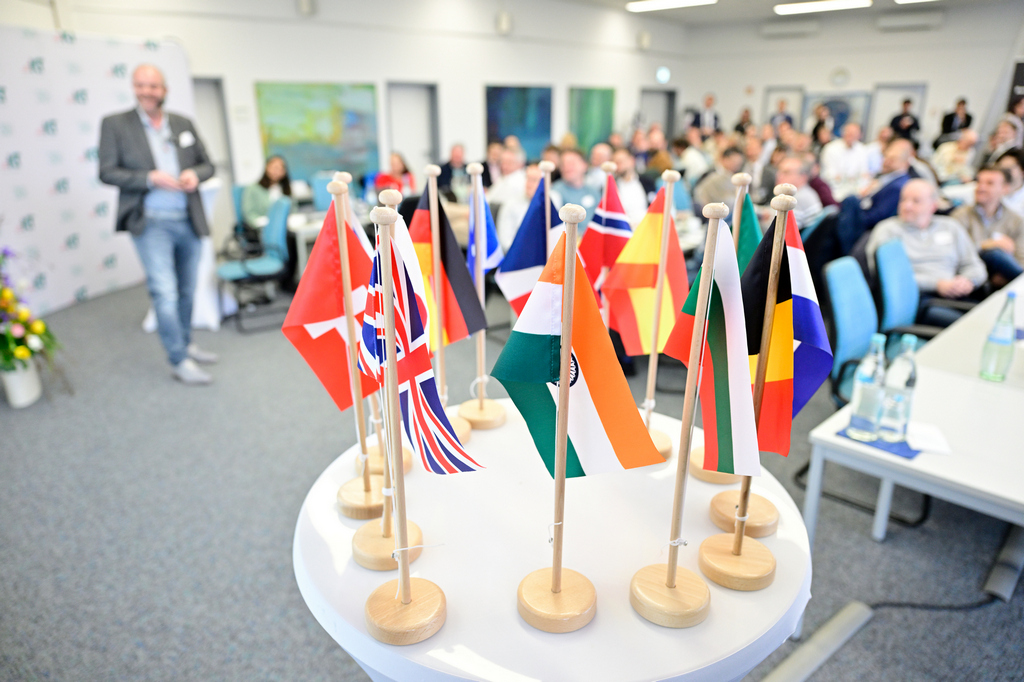
Fourteen countries are represented at the IKT conference ‘AI, Drones, Sensors and Robots for Smart Sewers and Urban Drainage 2026’.
What this means for network operators and sewer inspectors:
- Greater occupational safety due to fewer entries into dangerous environments
- Faster and standardised data collection
- Accurate 3D pipe measurement using LiDAR
- Precise detection of cross-sectional narrowings and route deviations
- Reliable geometries for custom-fit liner fabrication
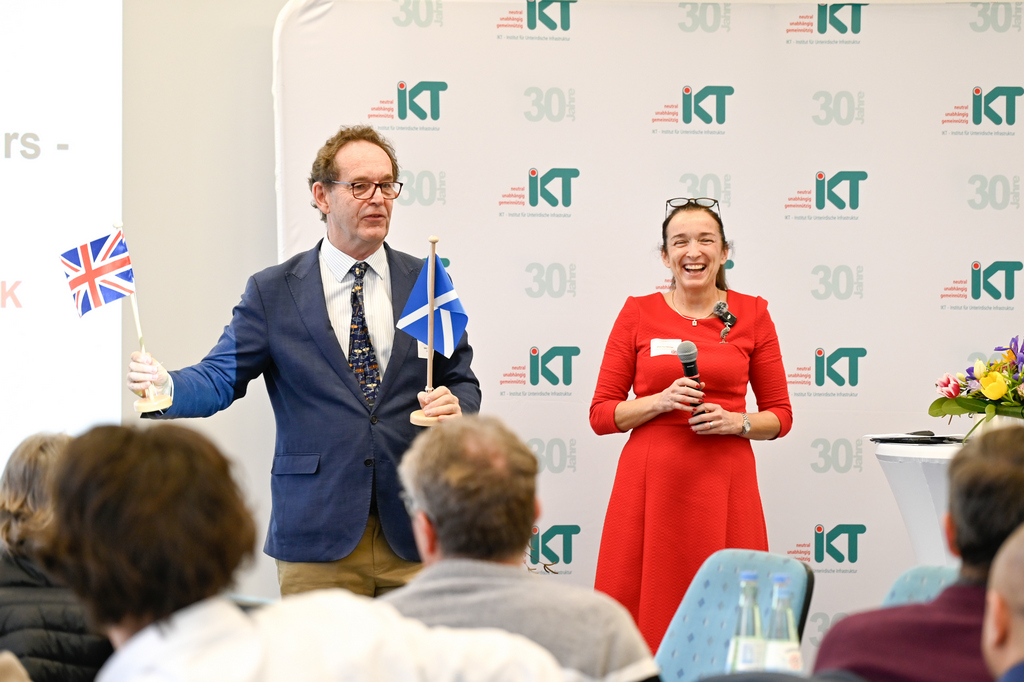
Shauna Herron (UK) presents case studies of sewer pipe inspection and surveying using LiDAR drones.
Drones can also swim
Drones can not only fly, but also swim. Above-water and underwater drones were also presented. They are used in partially or fully filled pipes. The systems are continuing to develop – especially with regard to greater autonomy.
Live demonstrations
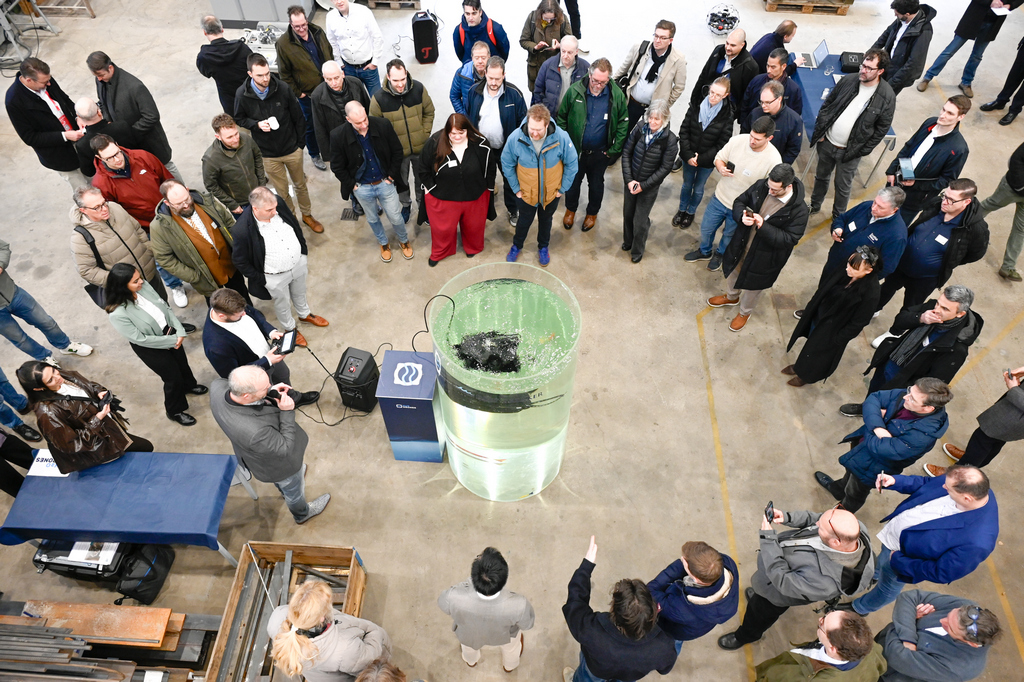
Demonstration of an underwater drone from the Netherlands in the IKT test hall
Sensors: the “Sewer Ball” and the Micro-MAC system
The „Sewer Ball“ from France can be used in gravity pipes to measure temperature, pH value, conductivity and redox potential. Infiltration can be localised and estimated volumetrically – providing a reliable basis for prioritising rehabilitation.
With the MAC system, IKT has developed a non-destructive method for determining pipe-soil stiffness – suitable for large profiles and, most recently, also for medium diameters of DN 300–800. This allows the condition of pipes to be assessed for rehabilitation planning and the structural performance of liners to be checked.
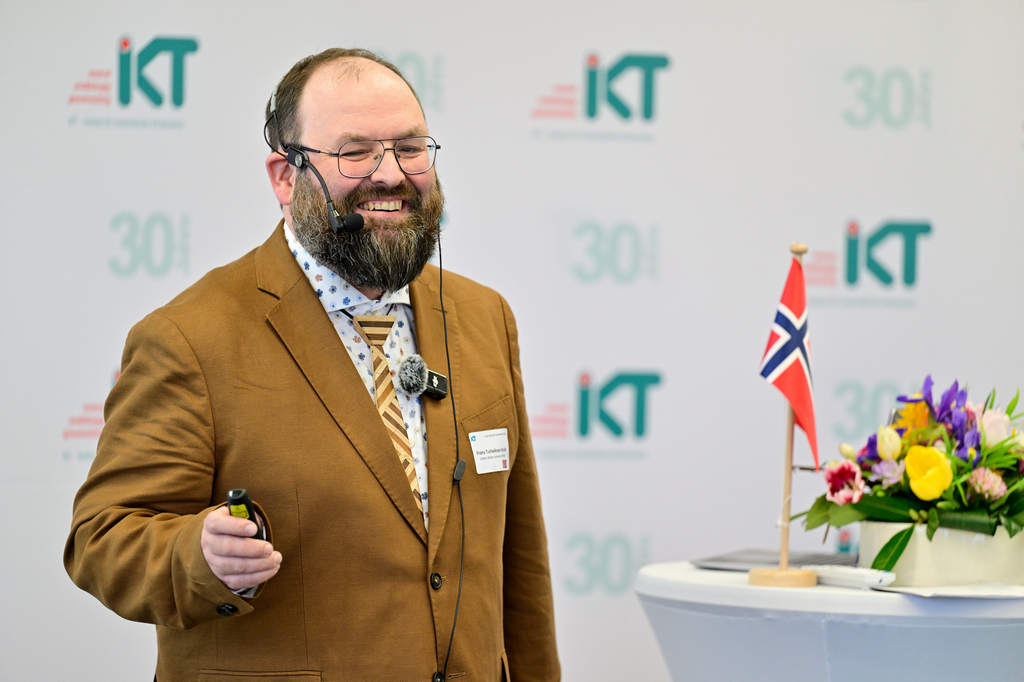
Prof. Franz Tscheikner-Gratl from Norway reports on the initial results of the PIPEON research project.
Robotics: Autonomous inspection and repair
EU research projects such as PIPEON are developing autonomous inspection and repair robots for sewers. These robots will be able to navigate rough sewer environments independently, detect damage, remove obstacles and install sensors in inaccessible areas.
The Institute for Database-Oriented Design (IDoK) at Jade University is conducting research into robotic dogs. These are intended to perform transport and assistance tasks for sewer workers in confined and hazardous environments.
AI in sewer operation – artificial & human intelligence
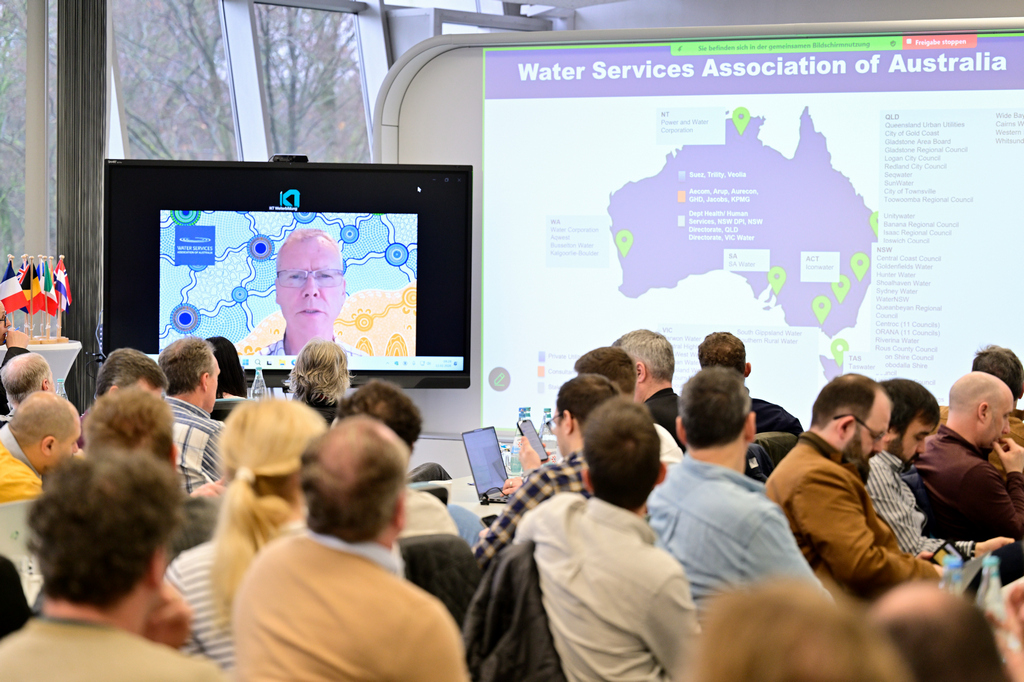
Joining us online from Australia: Greg Ryan from the Water Services Association of Australia (WSAA)
- AI-supported video analysis
- Infiltration detection
- Flood and overspill forecasts
- Ventilation control
- AI-based investment and rehabilitation planning
This shifts the focus in sewer operation away from purely reactive assessment towards data-based, strategic prioritisation.
However, experience has shown that without having a “human-in-the-loop”, accuracy declines. AI remains an assistance system – responsibility for its outputs remains with humans.
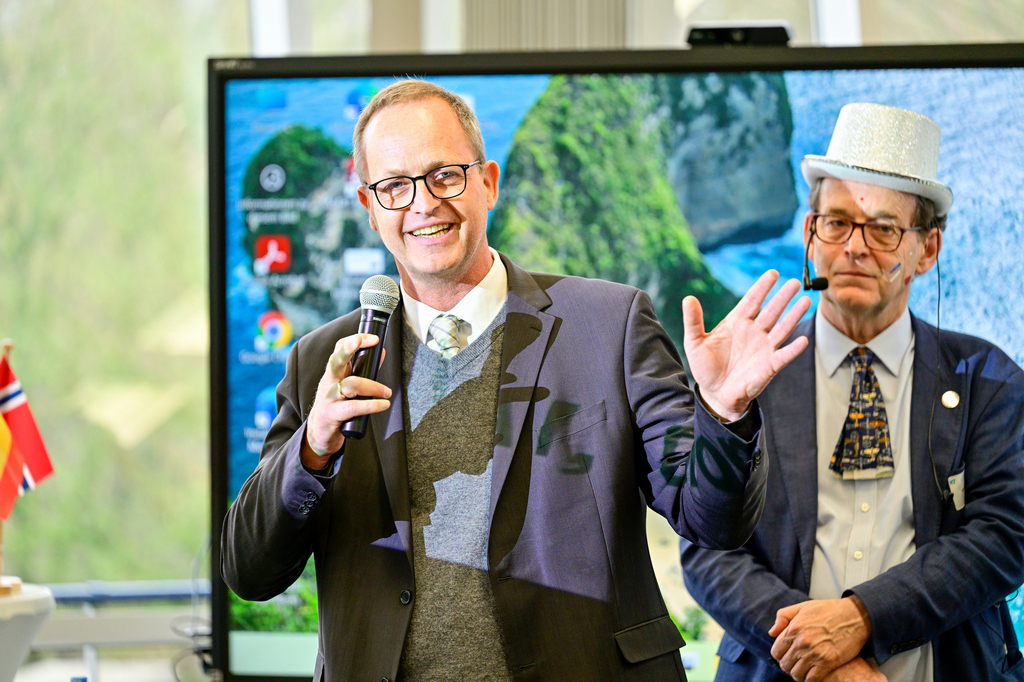
Prof. Dr.-Ing. Bert Bosseler, Scientific Director of IKT, discusses the opportunities and requirements of AI in sewer operation.
What matters now: collecting data, seizing opportunities
In the concluding panel discussion, it became clear that the biggest challenge is not AI itself, but data. Validated damage coding, clean time series and structured inventory data – without this basis, any AI remains a shot in the dark.
The future of sewer operation will be data-driven. Network operators must prepare for this now, according to Prof. Bosseler:
„Be prepared. Collect data.“
Because it is not AI technology that is the focus, but the quality of the data. Those who collect and validate data today are laying the foundation for good decisions tomorrow.
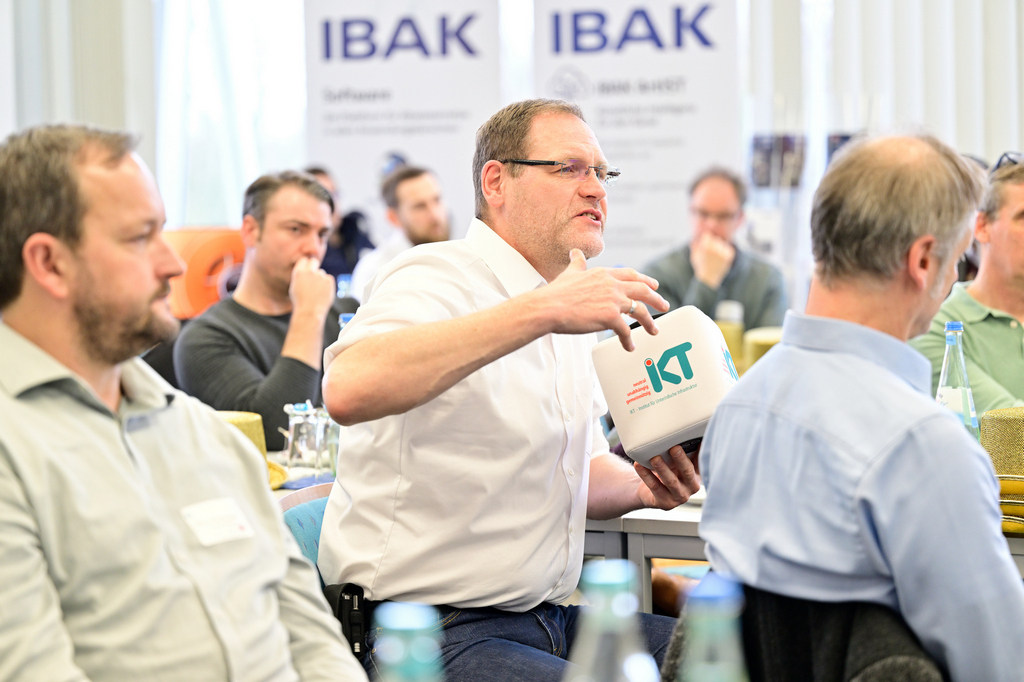
Michael Voß from Frankfurt/M. City Drainage sets requirements for AI from the perspective of a network operator.
Conclusion for sewer network operators
The conference showed that drones make complex inspections possible and increase work safety; sensor technology creates reliable data; robotics automates tasks; and AI speeds up evaluation and prioritisation. However, humans remain responsible.
And those who collect and validate data in a structured manner today are laying the foundation for the data-driven sewer operation of tomorrow.
🎧 Listen now: The conference podcast
Further insights and an assessment of the most important findings are provided by Prof. Dr.-Ing. Bert Bosseler, Scientific Director of IKT, in the latest podcast (in German):
Bosseler’s notes from 11/12 February 2026 on the international IKT conference
👉 All podcasts by Prof. Bosseler can be found here: KanalSpezial – the KomNetAbwasser podcast

IKT International Conference 2027 – Save the Date!
Save the Date
The next IKT conference on AI, drones, sensors and robots will take place on 3 and 4 February 2027 at IKT in Gelsenkirchen, Germany.
Click here for the Conference Photo Album
IKT International Conference AI, Drones, Sensors and Robots for Smart Sewers and Urban Drainage 2026
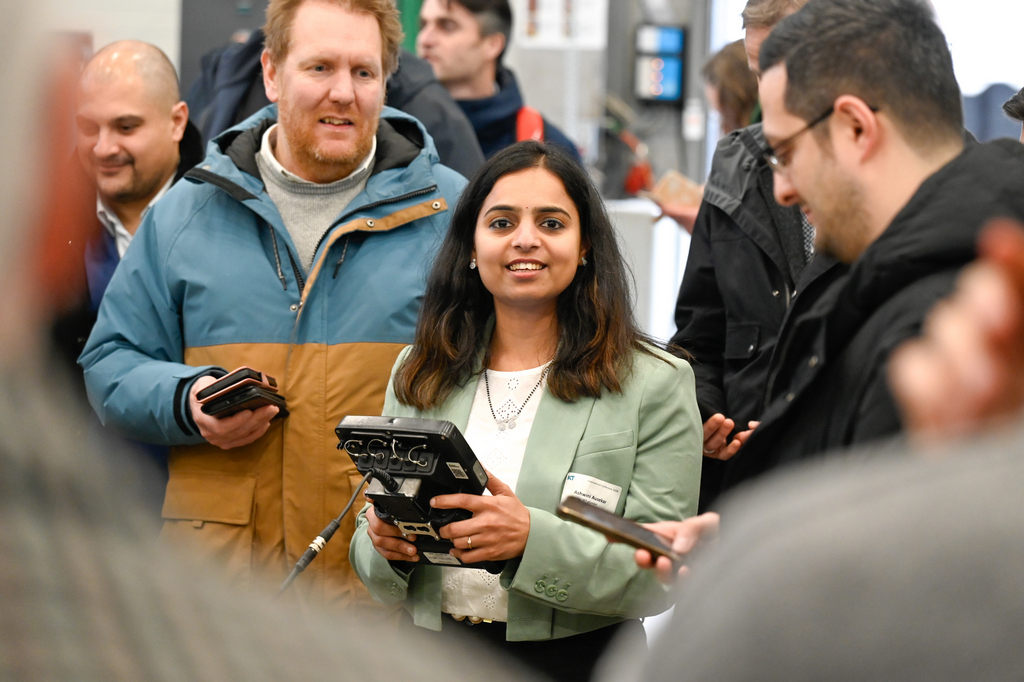
Ashwini Ausekar, IKT Academy & International Relations
Contact person
Ashwini Ausekar, M.Sc.
Head IKT Academy & Int. Relations
phone: +49 209 17806-0
email: ausekar@ikt.institute
Related Posts
 IKT International Conference 2025: AI, Drones, Sensors and Robots for Smart Sewers and Urban Drainage
 Pushing the Boundaries of Urban Drainage: AI, Drones, Sensors & Robotics
 Celebrating 30 Years of IKT: “Sewers for the 21st Century” International Conference
 IKT attends the China-Europe Trenchless Technology Conference
 Withstanding the pressure: liners for pressure sewers put to the test
 Handling of drainage-system water from private sites
 Infiltration tightness at materials changeover and transition points
Sorry, the comment form is closed at this time.