Online Seminars: IKT Launches 6x Expert Knowledge Transfer Webinars
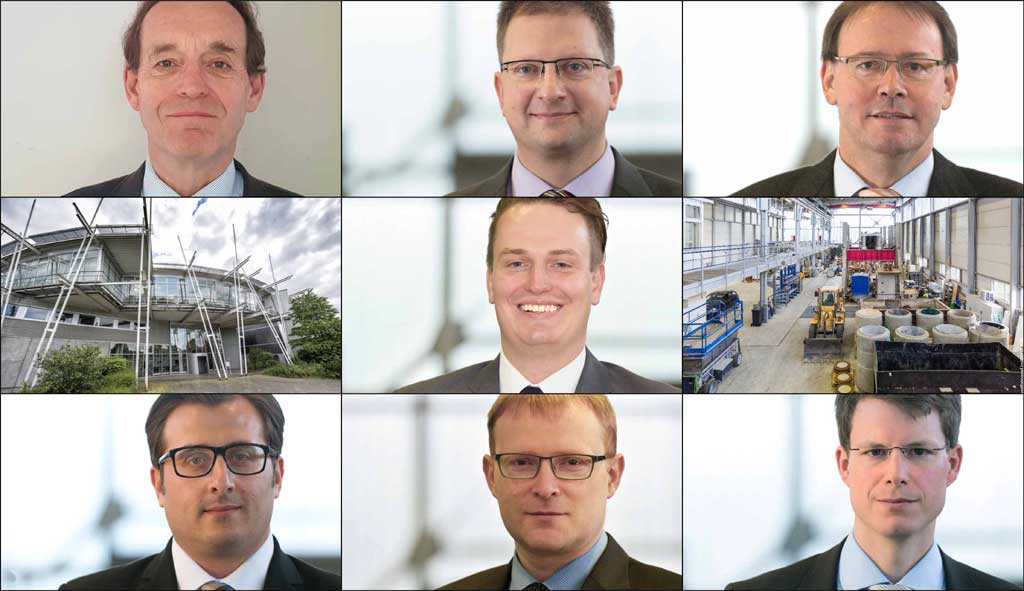
Photo montage made up of portraits of seven men, an office building and a hall

IKT scientists addressing the issues sewer network operators have.

IKT has spent 25 years addressing the issues sewer network owners have in extending the life of ageing assets, through practical research of the problems they are encountering. Using this, we provide extensive knowledge sharing and training to the German sewer network owners and now we are sharing this in the English language in a series of 6 live webinars, from 30th April 2020.

Webinar titles

  1. Rehabilitation of Sewer Manholes
  2. CIPP Liner Rehabilitation – Quality Issues and Quality Assurance
  3. Trees and Pipes – Preventing Root Damage
  4. Repair of lateral sewers
  5. TFBM – Temporarily flowable self-compacting backfill materials in sewer construction
  6. Decentralised Surface Water Treatment

View the detailed programme (PDF)
Webinars can also be booked individually.

Research and practical application

In these webinars, the current findings from IKT‘s practical research for sewer network owners will be summarised for each topic, together with the relevant recommendations for their practical application. They will also raise your awareness about where relevant IKT reports and information resources can be found. The speakers give their presentations live in a virtual seminar room and are available for questions and discussions. Dr Iain Naismith, Senior Research Associate at IKT, will lead through these sessions.

Expect this

30th April 2020: Rehabilitation of Sewer Manholes
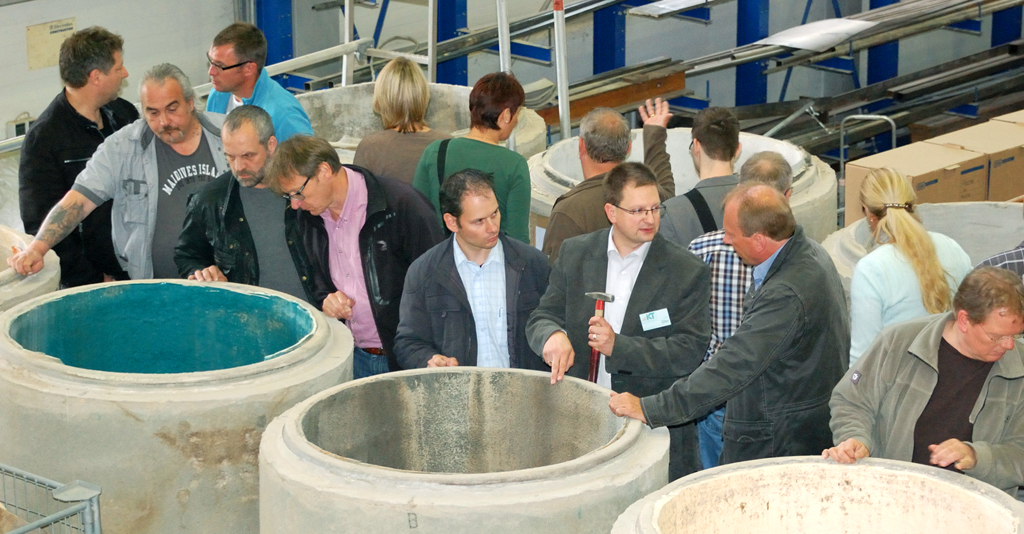
a group of people inspecting renovated sewer manholes

What to expect of the various rehabilitation systems for sewer manholes?

  • Damage patterns and remediation tasks
  • Remediation procedures
  • Quality assurance

Markus Gillar
Senior Research Associate, project manager
Some background to this webinar: IKT Compare – Test of Coatings for Manhole Shafts


7th May 2020: CIPP Liner Rehabilitation – Quality Issues and Quality Assurance

  • CIPP methods
  • Quality checks
  • Quality overview – LinerReport 2019

Dieter Homann
Head of testing laboratory for construction products
Some background to this webinar: IKT LinerReport 2019 (PDF)


12th May 2020: Trees and Pipes – Preventing Root Damage
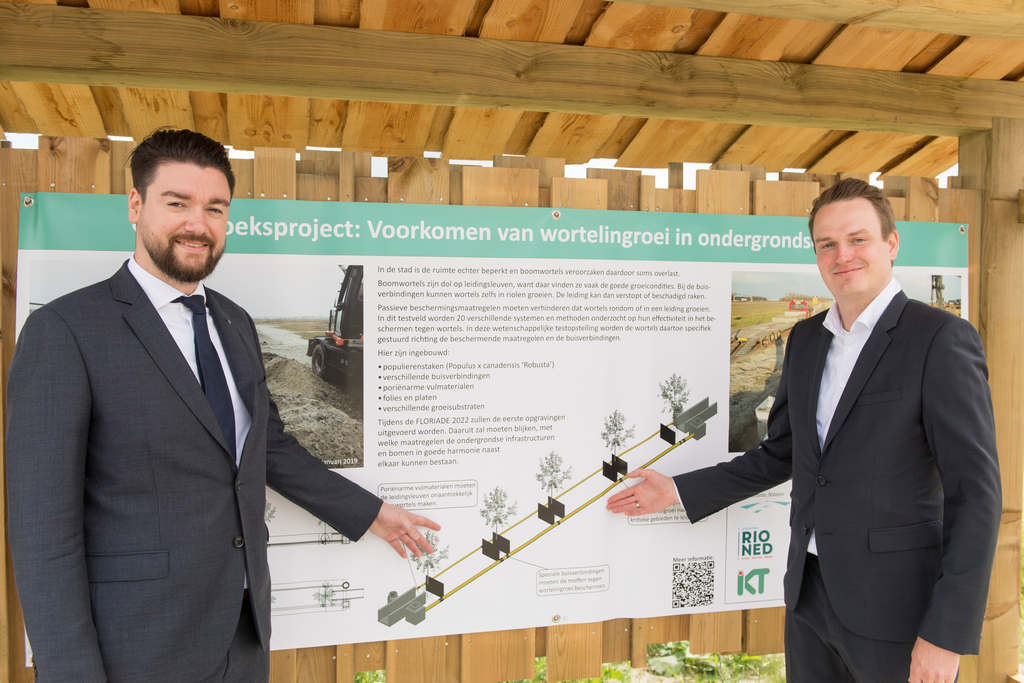
two men in suits pointing at information board

In a test track along a row of trees, 24 passive root protection measures have been installed.

  • Pipe and root interactions
  • Protective measures
  • Quality assurance

Mirko Salomon
Senior Research Associate, project manager
Some background to this webinar: Root infiltration into waste water sewers


14th May 2020: Repair of lateral sewers

  • Findings from IKT Compare product tests
  • Connection nozzle repair
  • Patch repairs and Short liners and inner cuffs

Serdar Ulutaş
Head of IKT Compare Testing
Some background to this webinar: IKT Compare – short liners for house connections


19th May 2020: TFBM – Temporarily flowable self-compacting backfill materials in sewer construction
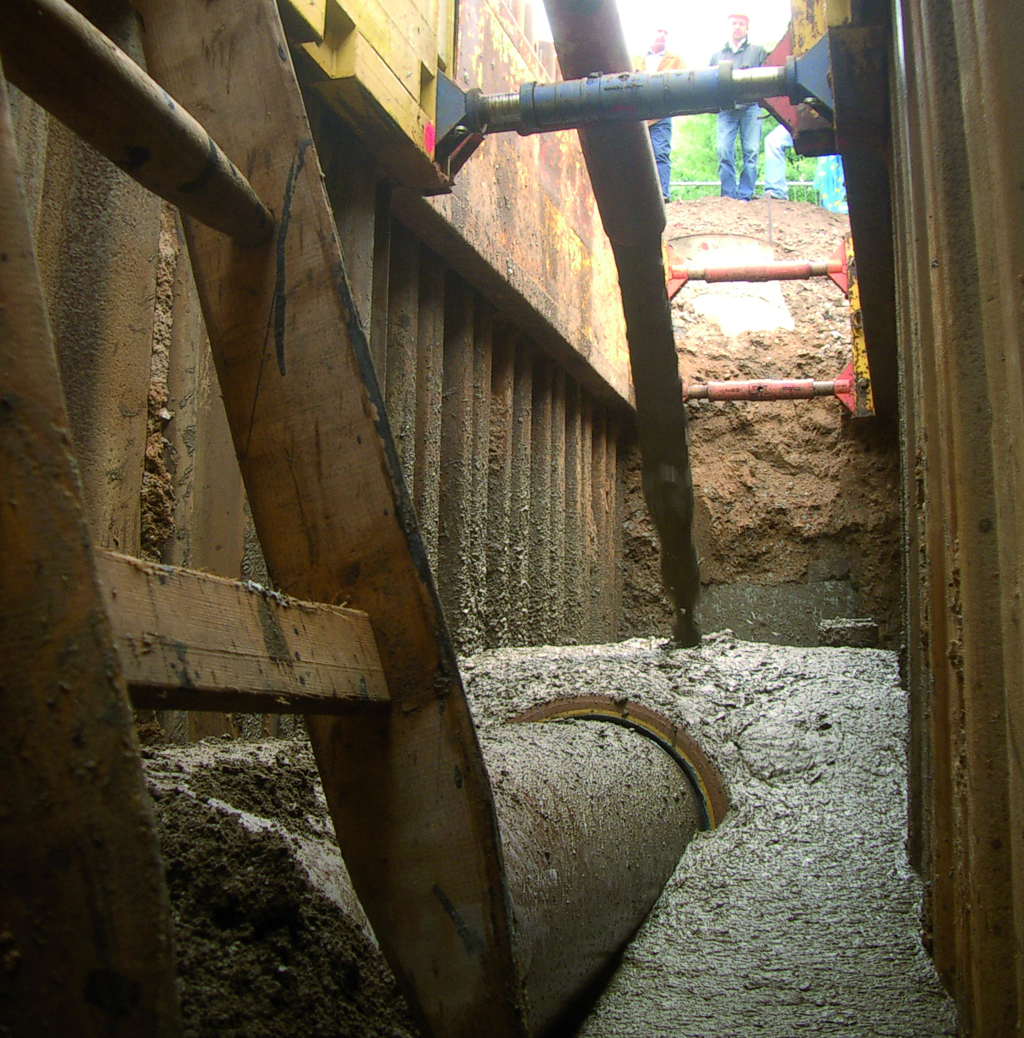
liquid soil being filled in trench

What are liquid soils capable of?

  • Basics
  • Requirements and characteristics
  • Construction processes and quality assurance

Dr Mark Klameth
Senior Research Associate
Some background to this webinar: IKT product test on liquid soils


20th May 2020: Decentralised Surface Water Treatment

  • Need for rainwater treatment in surface water sewer networks
  • Approval procedures and regulations
  • Market overview and experience with decentralised plants

Marcel Goerke
Head of IKT Test Centre for Rainwater Treatment
Some background to this webinar: Decentralised treatment of stormwater (PDF)

Technical notes

Participation is possible with a computer (with camera and microphone), tablet and smartphone as well as by telephone. After registration you will receive a link to our online seminar room, using GoToMeeting. The virtual seminar room is open for a technical check 15 minutes before the start of the event.

Join now!

6x Expert Knowledge Webinars – IKT Scientists Share Knowledge from their Specialist Areas

6 webinars during the period from 30th April to 20th May 2020 – can also be booked individually!
The webinars are free to attend but you must pre-register.
Programme and registration

Contact Person

Iain Naismith
Mobile: +44 (0) 7983 605219
Office: +44 (0) 1491 712707
E-mail: naismith@ikt.institute



Slides now Available: Sewer Operation in Current Crisis, 17th April

Laptop and headset for web meetings or video telephony

Sewer network operation during corona crisis: KomNet and IKT held a web meeting

On 17th April 2020 IKT/ComNet WasteWater held a webinar to examine how sewer network operation is continuing during the fight against the coronavirus. Now the slides of the presentaitons are available for download.

It was the second of a series of webinars we are holding following the decision of the Kommunales Netzwerk Abwasser (KomNetABWASSER), which comprises 60 German and Dutch sewer network owners, to support all sewer network operators to the best of their ability in the current crisis. A hotline has been set up and a series of web conferences held for German, and English speakers to exchange information and network.

International Webinar ‘Coronavirus and Sewer Operation’

blue and grey on white logo of ComNet WWThis webinar summarised the current experience in continuing to operate sewers in Germany, Belgium, UK, and The Netherlands with speakers from sewer network owners and associations.

Programme

  1. Summary of online information available internationally – Iain Naismith, Senior Research Associate @ IKT
  2. Experience from UK – Tony Griffiths, Drainage and Strategy Planning Manager @ United Utilities
  3. Experience from Flemish Region, Belgium – Wendy Francken, Director @ VLARIO
  4. Experience from The Netherlands – Hugo Gastkemper, Managing Director @ STICHTING RIONED
  5. Experience from Germany – Bert Bosseler, Scientific Director @ IKT/KomNetAbwasser & Sebastian Beck, Operations Manager @ Eigenbetrieb Abwasser, City of Rheda-Wiedenbrück

Previous English language Webinar

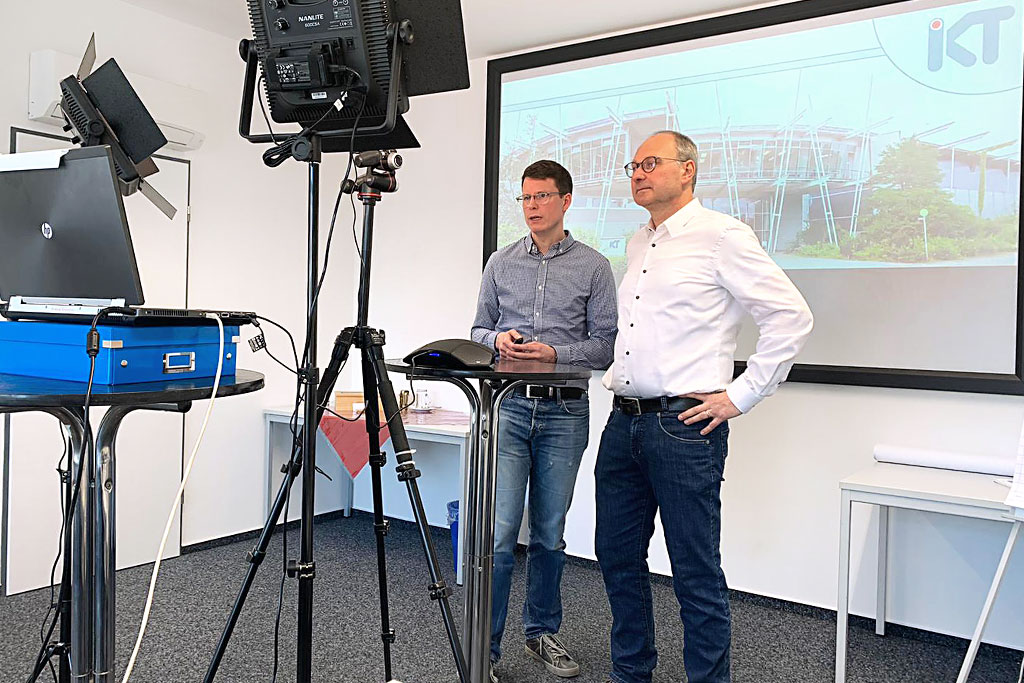
two men in front of screen

Keeping you informed about coronavirus

On 25th March we held our first English language webinar on ‘Coronavirus and Sewer Operation’. This summarised the current guidance and approach to sewer operation in Germany and considered the advice available online in other countries.

view the slides of our first English language webinar on ‘Coronavirus and Sewer Operation’ (PDF)

download the presentation shown at the second event (PDF)

Organising exchanges

We invited all interested wastewater network operators to a first web telephone conference to announce the start of the initiative. “We want to exchange views on which organisational measures need to be taken and which tips and ideas are available in the network”, says Marco Schlüter, director of the KomNet.

New hotline for network operators

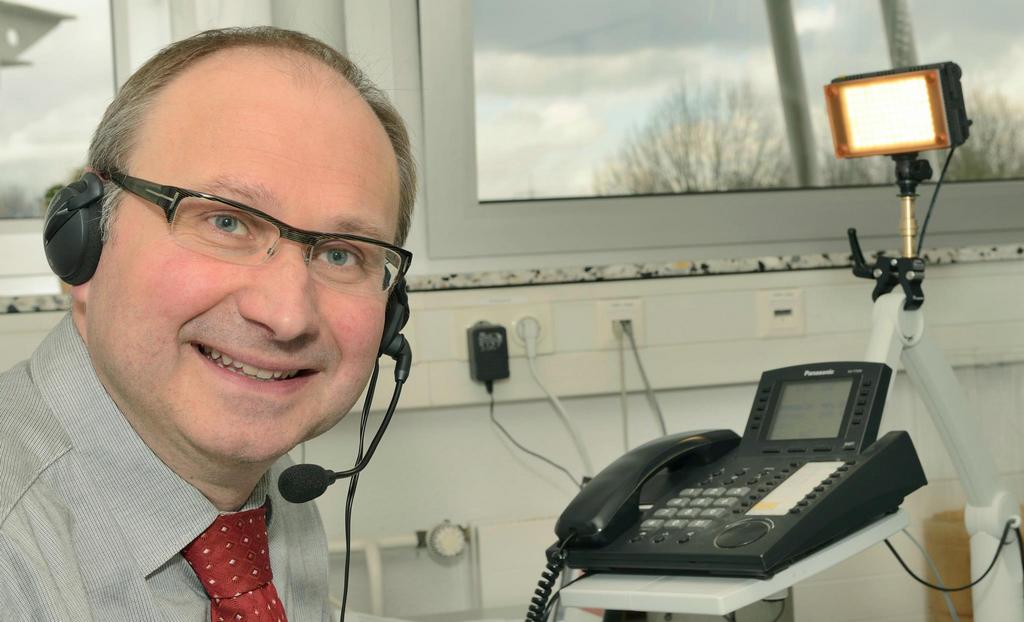
Man with headset looks into the camera

New hotline: KomNet director Marco Schlüter is providing all the support he can in this crisis.

In addition, KomNet has set up a hotline which is available immediately. You can reach us at any time on the number +49 177 2801198. Ask us all your questions or give us tasks on all topics that concern you – even outside of Corona.

Contact persons

Dr. Iain Naismith
at our UK office
Phone: +44 7983 605219
E-mail: naismith@ikt.institute

Marco Schlüter
German office
Phone: +49 209 17806-31
E-mail: schlueter@ikt.institute
Hotline for network operators: +49 177 2801198

International Roundup: Advice on Coronavirus and Sewer Network Operation

We are keeping you updated with information from various countries concerning the effects of the Coronavirus on sewer and wastewater treatment operations.
to the list with international links we have identified so far listed by country


Important information from wastewater companies: Dispose of toilet paper alternatives correctly – avoid backflow from sewers

empty toilet paper roll with the word don't panic written on it

What now? Whatever you use instead, don’t flush it down the drain!

The corona pandemic is forcing some people to take unusual measures. When supplies of toilet paper at home are exhausted and the shelves in the supermarkets are empty, people have to become creative. Then handkerchiefs, kitchen towel, non-flushable wet wipes and baby wipes, newspapers and, as we hear, even pages from books and old t-shirts are being used.

You can do that if you don’t flush these things down the toilet after use, but dispose of them with household waste, say the sewerage companies of the Kommunales Netzwerk Abwasser or Community Network WasteWater. Otherwise there is a risk of blockages in the sewer from your house, which can lead to backflow, sewer flooding of your house and consequent expensive work to put it right, warn sewage disposal companies.

Toilet paper with a decisive advantage

Real, genuine, normal toilet paper starts to break up as soon as it comes into contact with water. It starts in the toilet bowl, continues in the sewage pipe and usually doesn’t get to the main sewer in one piece. “We hardly even see toilet paper floating in the larger sewers,” say those who work down there and keep our sewage system running.

Toilet paper – everything else is poo

yellow pack of wet wipes on white tiles

Saves trouble down the pipe: throw wet wipes and other alternatives to toilet paper in the trash can instead of the toilet bowl

All other papers and cloths have the property of being tear-resistant even when damp. This is the case because wet tear resistance is required for their intended application. However, when placed in the sewage system – even within the pipes in in our own house – this can become very problematic. You don’t usually notice it right away, after all, the first ones don’t immediately block the entire sewage pipe. But over time they settle in bends or on straight sections with little gradient. And at some point nothing works anymore.

Save yourself trouble!

The consequences can be quite unpleasant: from backups and nuisance odour to unusable sanitary installations such as toilets, showers and washbasins and even flood damage. It can also really cost you money – if you can even get a tradesman on short notice.

But even if these cloths and papers slip smoothly through your pipes, they can still cause problems at other points in the sewage system. Especially in pumping stations the tear-proof cloths can block the pumps. This can lead to hygiene problems in an entire district, which must be prevented at all costs. Right now we all have other more important problems.

Dispose of toilet paper alternatives correctly!

man with glasses, suit and tie talking

Marco Schlüter, head of KomNetABWASSER (ComNetWasteWater): “Only toilet paper belongs in the toilet.”

So: when the toilet paper runs out, you can certainly use other materials – they just don’t belong in the toilet afterwards. They belong in a bin with a lid next to the toilet. Holidaymakers who visit Greece know this and can confirm it: it works. It can be done. The garbage bag can then be regularly disposed of in the residual waste bin and you and the sewage companies will be helped a lot.

Also inform your neighbours! In a multi-family house you share some sewer pipe and the costs for the plumber are shared by all. You are also welcome to share this article in the social media!

Contact person

Marco Schlüter, IKT
Manager KomNetABWASSER
Phone: +49 (0) 209 17806-31
New hotline for wastewater companies: +49 (0) 177 2801198
E-mail: schlueter@ikt.de

Municipal network – open to all wastewater companies

logo of KomNetABWASSER, the municipal network of wastewaterThe Community Network WasteWater (KomNetABWASSER) is an initiative of currently about 60 wastewater network owners with the aim of jointly implementing the municipal wastewater disposal obligation in a better and more citizen-friendly manner – as cost-effectively as possible and in accordance with the generally accepted rules of technology. The non-profit IKT ‑ Institute for Underground Infrastructure organises and supports the network.

Even during the coronavirus epidemic the network participants are meeting regularly in virtual space. Since there has been a real toilet paper crisis in many places and many people have to find alternatives, the network participants are increasingly discussing problems caused by the incorrect disposal of materials through the toilet. It is repeatedly pointed out that not only the companies have to eliminate problems caused by wet wipes and other non-flushable products, but that problems often arise on the premises of their customers.

More about the network of wastewater companies on the KomNetABWASSER website.


Webinars on Corona Virus and Sewer Operation

Laptop and headset for web meetings or video telephony

KomNet and IKT invited interested sewer network operators to a web meeting. More to follow.

Corona crisis planning – this is the task currently facing all sewer network owners! In view of the current situation, the Kommunales Netzwerk Abwasser (KomNetABWASSER – Municipal Network Wastewater) and IKT have jointly decided to support all sewer network owners to the best of their ability.

A hotline has been set up and the first of a series of web conferences was held where more than 60 network operators were able to exchange information and network.

Upcoming International Webinar

We will be holding an international webinar in English for sewer network owners on ‘Corona virus and sewer operation’,

This will summarise the current guidance and approach to sewer operation in Germany and consider advice provided in other countries. This meeting can be joined from computer, tablet or smartphone.

Organising exchanges

We invited all interested wastewater network operators to a first web telephone conference on last Wednesday to announce the start of the initiative. “We want to exchange views on which organisational measures need to be taken and which tips and ideas are available in the network” says Marco Schlüter, director of the KomNet.

New hotline for network operators

Man with headset looks into the camera

New hotline: KomNet director Marco Schlüter is providing all the support he can in this crisis.

In addition, KomNet has set up a hotline which is available immediately. You can reach us at any time on the number +49 177 2801198. Ask us all your questions or give us tasks on all topics that concern you – even outside of Corona.

Contact persons

Dr. Iain Naismith
at our UK office
Phone: +44 7983 605219
E-mail: naismith@ikt.institute
Marco Schlüter
German office
Phone: +49 209 17806-31
E-mail: schlueter@ikt.institute
Hotline for network operators: +49 177 2801198

This is KomNetABWASSER

logo of KomNetABWASSER, the municipal network of wastewaterThe Kommunales Netzwerk Abwasser (KomNetABWASSER), or Community Network for Wastewater, is an initiative of about 60 German and Dutch wastewater companies. The aim is to jointly implement the obligation for municipal wastewater disposal in a better and more citizen-friendly manner – as cost-effectively as possible and in accordance with the generally recognised rules for the application of technologies. To this end, the Network makes use of IKT’s services. This means that not everyone has to reinvent the wheel again and again.

Engine, idea provider, sparring partner
KomNetABWASSER sees itself as an initiator and supporter for the participating municipalities. Current topics, which the municipalities want to address, are scientifically examined and practically inplemented.

Interested? You can find out more about KomNetABWASSER here. (in German only, sorry!)

Contact us
Marco Schlüter
T: +49 209 17806-31
E: schlueter@ikt.institute


How IKT is Responding to the Coronavirus

yellow virus with red dots on blue background

IKT’s plan: Being there for customers despite coronavirus

In view of the progressive spread of the coronavirus, IKT has adopted its own preventive plan. The protection of the health and safety of our customers, employees and their families is our highest priority.

For this reason – as far as the activities allow – home working has been provisionally ordered until Easter. All IKT scientists and testing staff will remain fully available to customers and partners via e-mail and mobile phone.

Our regulations at a glance

  • Home working with secure availability via mobile phone and e-mail
  • Testing staff continue to work at the laboratory
  • Research and product testing continue
  • Long-term trials continue
  • KomNetABWASSER continues to support wastewater companies
  • Seminars cancelled until 30 April – some courses will be offered online

Testing operations continue

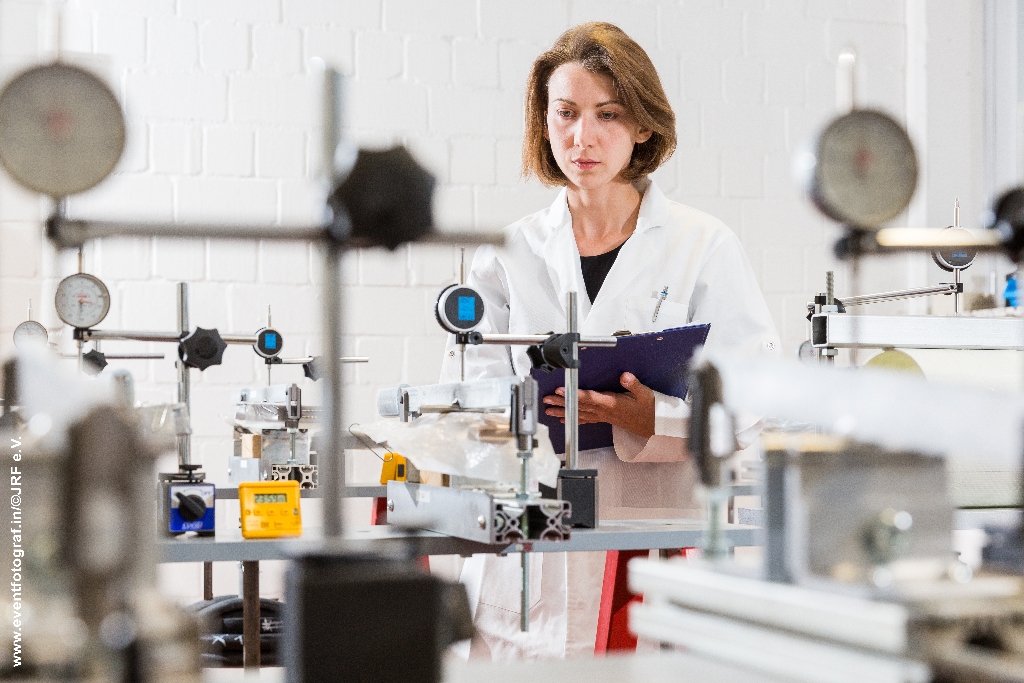
Woman in white smock with clipboard in a test laboratory

There for you: the IKT test centre for building products

One of the aims is to ensure that the IKT Construction Products Test Centre can continue to operate. There must be no delays on construction sites due to missing test results. “You are welcome to continue to commission us with your tests and send us liner samples”, says Dieter Homann, head of the test centre. “If you have any questions or uncertainties, please feel free to contact us at any time!”

Test centre for flow measurement

The testing laboratory for flow measurement is also continuing to work so that plant operators can meet the deadlines set by the authorities for the inspection of their plant. “In order to save you inconvenience, we will also come to you in the next few weeks for field work, if you allow us to”, reports test centre manager Marcel Goerke.

Research and product testing

We will also continue our research and product testing activities. In this way, we want to ensure that network operators can benefit from the results as soon as possible. “The long-term tests in the test hall are also continuing”, assures Serdar Ulutaş, Head of IKT-Compare.

Municipal Network for Sewage

man with glasses, blue shirt and checked jacket lecturing

Municipal network: Marco Schlüter and his team will support the wastewater companies to the best of their ability.

In the coming weeks, KomNetABWASSER will continue to support the sewerage network operators to the best of its ability in carrying out their tasks. A strong community is especially important in such uncertain times. “Just now we can help each other in the network of the sewage companies. We are always available for sewage companies. In addition, we are now also setting up an online exchange of experience,” announces network manager Marco Schlüter. He also promises: “Today we have decided to support all wastewater companies – also beyond the KomNet – to the best of our ability in this difficult situation! What exactly this means will be communicated shortly.

Seminars initially cancelled until 30 April

All planned events will be postponed until after 30 April 2020 to prevent the virus from spreading in this way. The affected participants will be informed personally. “All registrations for cancelled events will be postponed free of charge to the next date in autumn,” promises Dr. Sissis Kamarianakis, Head of IKT Further Training, and adds: “Provided, of course, that the situation has calmed down considerably by then. The Training Team is currently working flat out to offer certain content online. The first offers will be available shortly.”

Business trips and external appointments

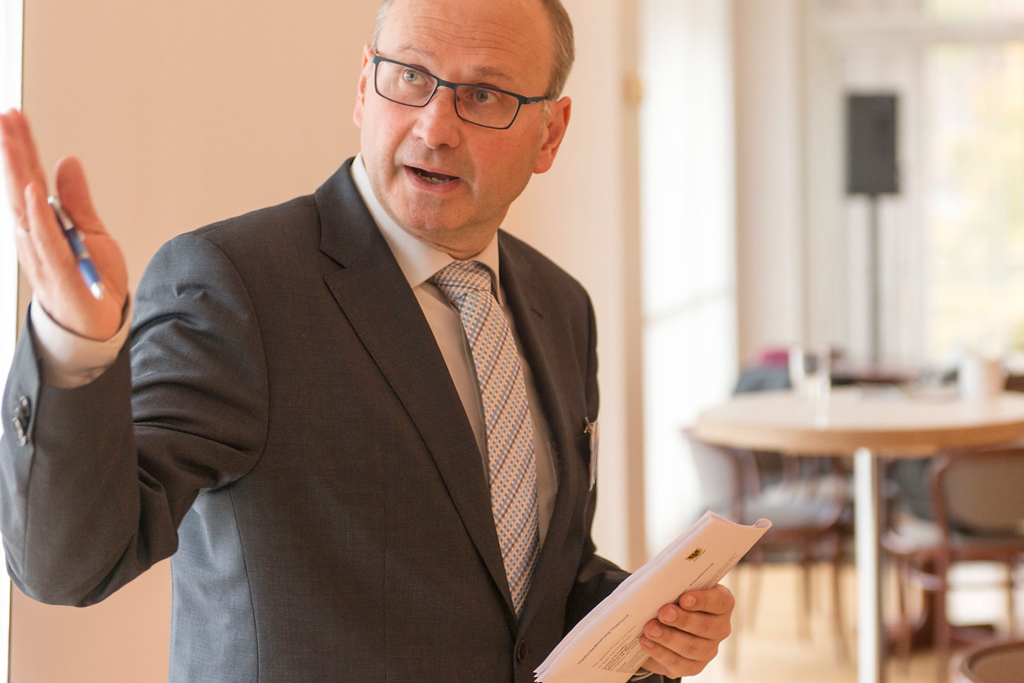
Man in suit with glasses and bald head holds pen and gestures

IKT Managing Director Dipl.-Ök. Roland W. Waniek: “We are aware of our responsibility for the health of our customers and employees.

“Business trips and external appointments are reduced to the absolutely necessary minimum”, says managing director Dipl.-Ök. Roland W. Waniek. Whenever possible, telephone conferences and web meetings are offered. In any case, on-site appointments will only be made with the express consent of the customer. If meetings with our employees are absolutely necessary, you can be sure that all necessary hygiene and precautionary measures are taken to avoid endangering your health.

Girls’ Day at IKT cancelled

IKT has set up three places for the nationwide Girls’ Day 2020, where schoolgirls can get a taste of professions that are still dominated by men, and registrations have already been received for these places. Due to the current situation, this year’s Girls’ Day has been cancelled. Should there be a catch-up date, our offer to the three girls is of course still open. Apart from that, there will be opportunities for internships again in the post-corona period – and of course for boys as well.

Accessability

We will be happy to continue to be your contact point for all questions concerning pipeline-related infrastructure and will therefore make every effort to remain as accessible as possible to you even in the crisis. In the event of complications that may nevertheless arise, we ask for your indulgence. The landline numbers of the home office staff are redirected to their business mobile numbers. And of course we can all still be reached by e-mail.

We will continue to monitor developments closely and will inform you in good time of any changes in plans and how things will continue in IKT after Easter.

Stay up to date with IKT

two men in front of screen

Marcel Goerke (l.) and Marco Schlüter keeping clients informed about coronavirus in a webmeeting.

IKT recently discussed the consequences of the coronavirus epidemic for wastewater disposal with the members of the KomNetABWASSER (Municipal Wastewater Network) in a working session. Read more here.

Members of IKT’s associations were also informed in a web meeting about the current status of operations and occupational health and safety.

And we have compiled a list of links with further information about Coronavirus in sewers from various countries, which is constantly updated.

We thank you for your loyalty, trust and patience (which we hope not to overstretch). We believe that we are well prepared for the coming weeks and will continue to do everything we can to maintain our usual service even in these difficult times.

Keep abreast of developments!
Subscribe to the IKT Newsletter now!

Contact person

Iain Naismith
Phone: +44 (0) 7983 605219
e-mail: naismith@ikt.institute


Coronavirus in Sewers? Don’t Panic! But be Careful.

attendees of a meeting

Current topic: Employees of wastewater companies discussed necessary protective measures in connection with the coronavirus epidemic at IKT.

The new coronavirus SARS-CoV-2 and the disease it causes (COVID-19) is keeping everyone busy right now. Politicians are advising on measures, companies worry about their supply chains, and wherever cases of infection are reported, people are emptying supermarkets in fear of being confined to home for months. 

Sewer network operators and service providers are also worried. They are rightly wondering whether infected people excrete the virus and whether it is then found in sewage? Can people be infected by waste­water? How can their staff and their relatives be best protected?

It is well known that pathogens can spread via human excrement and wastewater. After all, that is why there is a sewerage system. Prominent examples include hepatitis viruses, noroviruses and salmonella. So, there is basically no reason to panic. Representatives of sewage network operators agreed on this at a recent meeting of the Kommunales Netzwerk Abwasser (KomNetABWASSER – Municipal Network Wastewater) working group on “Sewer Operation”, held the at IKT ‑ Institute for Underground Infrastructure in Gelsenkirchen, Germany.

Municipalities provide ad hoc advice in KomNetABWASSER

man with glasses, blue shirt and checkered jacket lecturing

Marco Schlüter advises staff in sewer operations to exercise particular care and caution.

The KomNetABWASSER was asked by wastewater companies to what extent it is still possible to deploy employees for cleaning work in underground chambers, in the sewer network and at wastewater treatment plant. IKT’s Marco Schlüter, head of KomNetABWASSER, made this the first topic on the agenda of the working group meeting, and summarised the discussion among the 30 sewer operation managers present as follows: “The Federal Minister of Health has determined the outbreak of the epidemic in Germany. In this situation it is particularly important for public health that the sewerage system continues to function reliably. The prerequisite for this is healthy operating personnel. The sewage companies agreed that three points must be observed in the current situation: Firstly, special care must be taken with occupational health and safety, secondly unnecessary risks should be avoided at present and thirdly, of course, the usual hygiene recommendations must be consistently observed”.

Analysing risks

The Robert Koch Institute (RKI), which is responsible for risk assessment of infectious diseases in Germany, currently continues to assume that the risk to the German population is low to moderate. But, sewer workers are exposed to a potentially infectious medium, as the experts present at the meeting know. Their risk is therefore probably higher than that of the average population. And they return to their families after work, meet friends, chat with colleagues in the corridor. And they in turn…

Systems must operate!

two men sitting at table

Prof. Bert Bosseler: “The plants have to be running, otherwise we will have quite different hygiene problems.

However, not all employees with wastewater contact can simply be sent home for an indefinite period of time. Prof. Bert Bosseler, Scientific Director of IKT, pointed out that wastewater companies are responsible for ensuring the performance of wastewater disposal infrastructure. Although the health of employees and their families is at stake, the protection of the population is also at stake. “The plants have to be running, otherwise we’ll get completely different hygiene problems,” said Prof. Bosseler.

Protective equipment – follow the textbook 100%

The unanimous view of those present was: do not panic! It is important to inform and encourage employees to pay attention to their own behavior, to refresh their knowledge of occupational safety, to suspend work that is not immediately necessary and – very importantly – to carry out the required protective measures 100 percent according to the textbook.

man with glasses and a brown sweater lecturing

Marcel Goerke: “Always wear the prescribed protective gear!”

“This means: Always wear the prescribed protective clothing, never eat, drink or smoke in the work area, wash your hands frequently and disinfect, and strictly observe the relevant regulations such as TRBA 220 and DGUV 103-003,” said Marcel Goerke, research assistant and expert for occupational safety at IKT, when explaining the recommended measures and rules of conduct to the meeting.

Stop sewer cleaning?

The relevant Employer’s Liability Insurance Association (BG ETEM), in Germany, stated in response to an enquiry: For work that generates aerosols, the risk assessment of the specific activity could show that it is better to postpone the work if it is not absolutely necessary. This would mean stopping sewer cleaning for the time being. The representatives of the sewage companies present did not see this as a major problem as a temporary measure. However, cleaning of pumps and buildings cannot be suspended, said the network operators. This could lead to contact with contaminated wastewater. It is therefore all the more important to adhere strictly to the regulations on occupational safety.

Equipment shortages?

The question remained open as to what would happen if the safeguarding measures could no longer be implemented due to supply shortages. After all, most products come from China and nobody knows how the supply situation for important products will develop in the coming weeks. Protective suits of protection class 3 are still available, according to the participants, but longer delivery times must already be expected for FFP3 breathing masks.

3 principles

The participants agreed on three principles:

  • Care in occupational safety!
  • Avoid unnecessary risks!
  • Consistently observe the usual hygiene recommendations!

Otherwise: Do not panic! But be careful.

Contact person

Marco Schlüter
KomNetABWASSER
T: +49 (0) 209 17806-31
E: schlueter@ikt.institute

What is KomNetABWASSER?

logo of KomNetABWASSER, the municipal network of wastewaterThe Kommunales Netzwerk Abwasser (KomNetABWASSER), or Community Network for Wastewater, is an initiative of about 60 German and Dutch wastewater companies. The aim is to jointly implement the obligation for municipal wastewater disposal in a better and more citizen-friendly manner – as cost-effectively as possible and in accordance with the generally recognised rules for the application of technologies. To this end, the Network makes use of IKT’s services. This means that not everyone has to reinvent the wheel again and again.

Engine, idea provider, sparring partner
KomNetABWASSER sees itself as an initiator and supporter for the participating municipalities. Current topics, which the municipalities want to address, are scientifically examined and practically inplemented.

Many of the findings from the network work are incorporated into IKT’s training courses. Current examples are the ‘Sewer Operations Management’ course, the annual ‘SewerCleaningCongress – KRC 2020’ and the ‘Demand-oriented Sewer Cleaning’ workshops.
range of IKT’s professional trainings

Interested? You can find out more about KomNetABWASSER here. (in German only, sorry!)

Contact us
Marco Schlüter
T: +49 (0) 209 17806-31
E: schlueter@ikt.institute