Optimising sewer cleaning, exploiting operational synergies
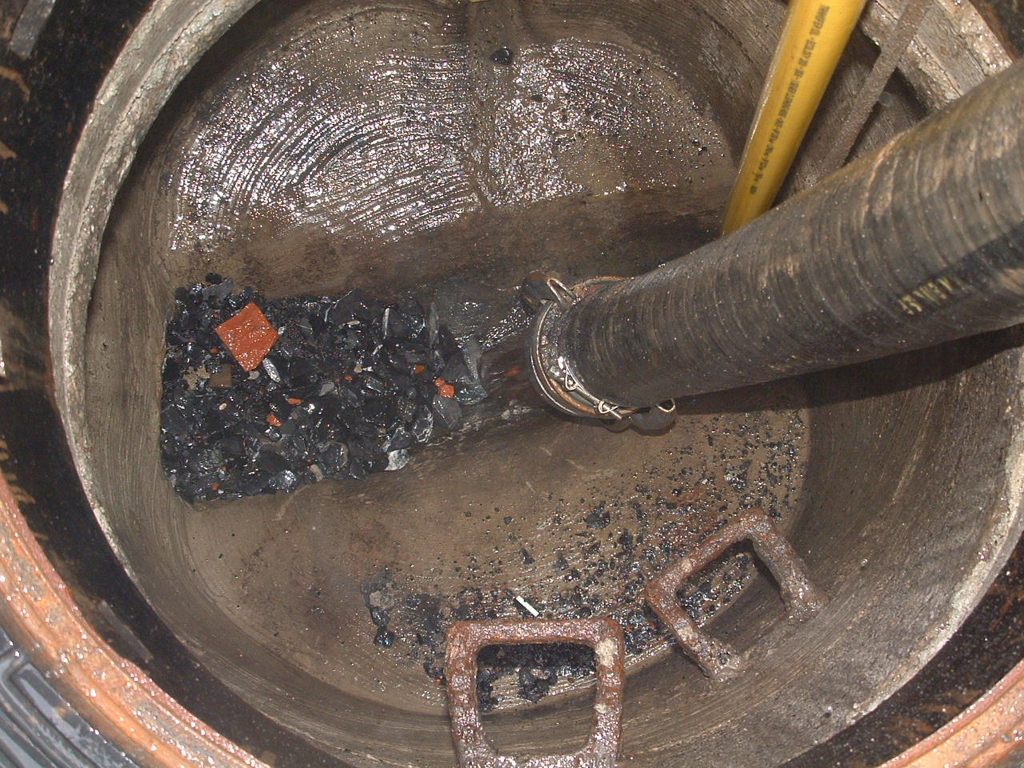
Conserving resources: Sewer cleaning only when and where necessary

Conserving resources: Sewer cleaning only when and where necessary

Cleaning is an important factor in maintaining the correct functioning of sewer system, and absorbs a significant portion of municipal budgets in North Rhine-Westphalia. It is, however, often the case that system operators’ resources are not used efficiently, or that, due to inadequate knowledge of the condition of sewer systems, lengths of sewer are cleaned without this being really necessary.

The introduction of optimising sewer cleaning strategy is frequently cited as an obvious solution, against the background pressure of rising cost. However, the restructuring of cleaning strategies is not always easy for system operators since there is no universally applicable concept for implementation. Also, the effects of such changes on the drain/sewer system and on the environment can in many cases not be estimated in advance.

The basic principles of optimising sewer cleaning strategies and their operational procedures and potentials for enhancement of efficiency have been elaborated in this research project. A large number of workshops and working meetings with sewer-system operators from all over Germany have been held to facilitate these changes for system operators. These provided an opportunity to compile and discuss the operators’ problems, wishes and requirements, and their experience with the use of various cleaning strategies. These findings have been compiled to provide other system operators with assistance in the optimisation of their own cleaning strategy.
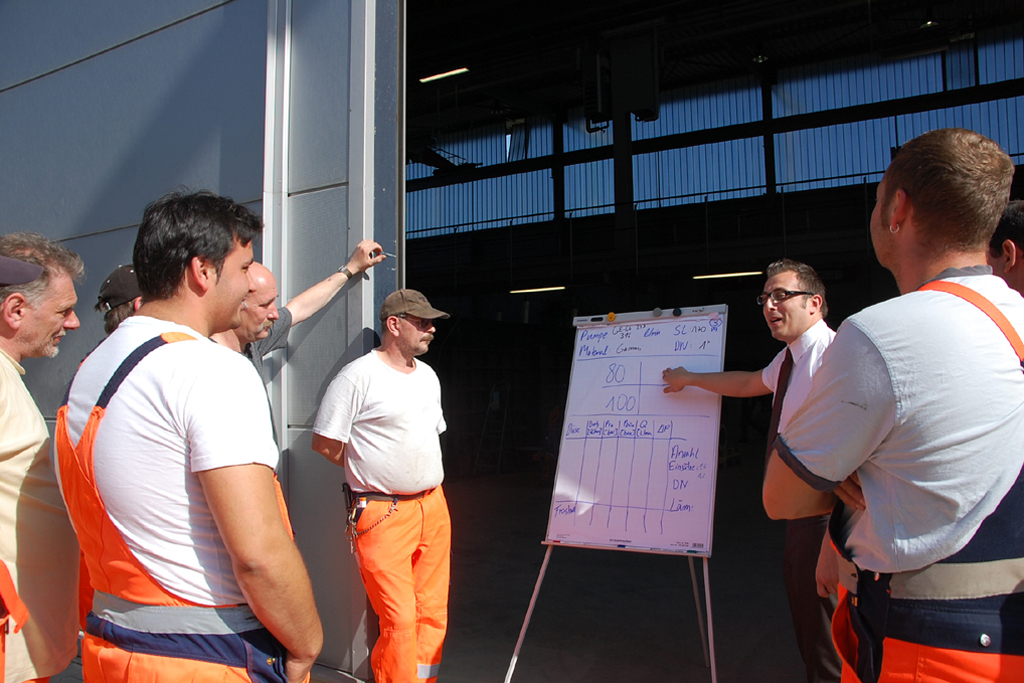
Discussing measured data: How efficient is the sewer flushing vehicle?

Discussing measured data: How efficient is the sewer flushing vehicle?

Comprehensive findings on the performance of HP nozzles and on the behaviour of depositions subjected to HP jetting have already been compiled in “Sewer cleaning – Nozzles, pressures, high-pressure jetting” project (Bosseler and Schlüter, 2004). The loads exerted on various pipe materials by HP jetting were also examined.

The current project examined the technical aspects of the formation and removal of depositions, with a view to optimised planning of cleaning operations (when, how often).

Scientific tests performed on a test length of sewer were used to determine how quickly depositions accumulate under defined conditions, how they change and the forces necessary to erode them. Supplementary laboratory-scale investigations studied the generation of hydrogen sulphide and the erosion-resistance of such depositions.

The results were used to draw conclusions concerning the selection of cleaning intervals, the aim being to reduce cleaning input and effort without risking blockages or other impairment of correct sewer-system functioning.

Project title

“Investigations of optimising sewer cleaning, exploiting operational synergies – Phase 1”

Download report

(German version only)
Report (194 pages)
Annex: Materials for communications activities for promotion of strategy change (252 pages)
Working aid (9 pages)

Project management

Ruhr University Bochum, Chair of Urban Water Management and Environmental Engineering

Project participants

IKT ‑ Institute for Underground Infrastructure

Client

Ministry for Climate Protection, Environment, Agriculture, Nature Conservation and Consumer Protection of the German State of North Rhine-Westphalia

Contact

Serdar Ulutaş
Dipl.-Ing. (FH), MBA

T: +49 (0) 209 17806-32
E: ulutas@ikt.de
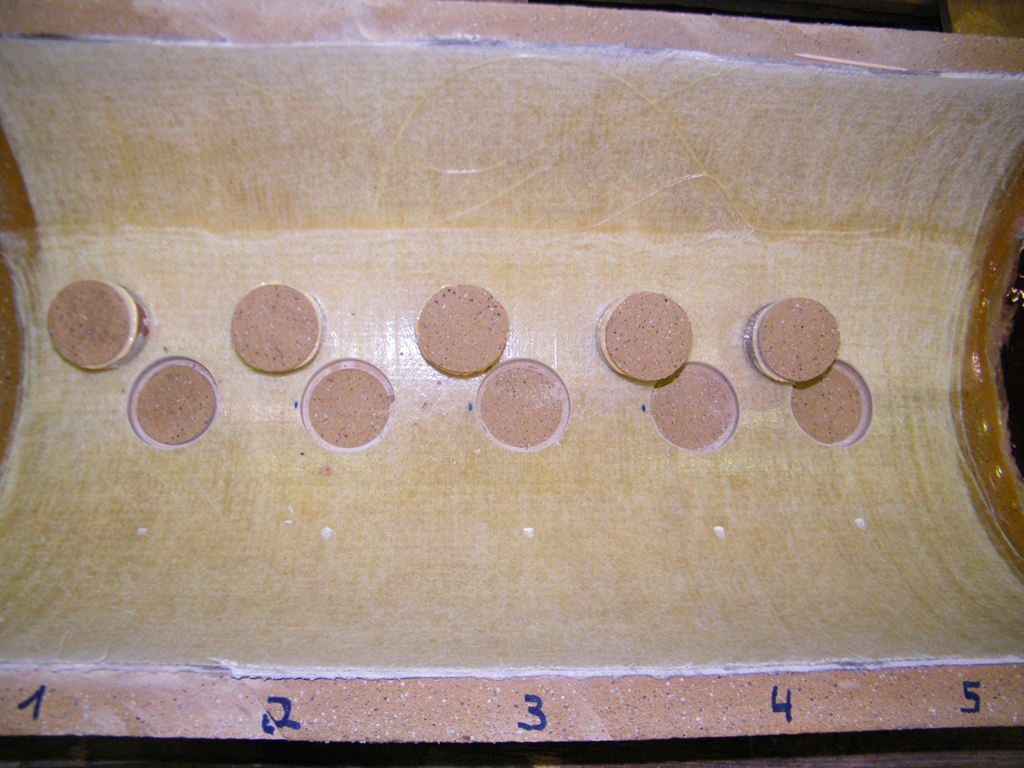


Adhesion properties of short-liners

Tensile-adhesion testing of short-liners

Tensile-adhesion testing of short-liners

Short lengths of selected repair systems were tested under external water pressure to examine their potential for sealing pipes against groundwater pressure. Comparative tensile-adhesion tests were undertaken using four short-liner systems on eleven different surfaces in order to determine the factors influencing performance and any need for surface preparation when refurbishing using short-liners.

The systems predominantly exhibited good performance, and confirmed that repairs aimed at sealing against external water pressure are possible in principle. However, the extent to which differing results might be found in the case higher water pressures and/or larger volumetric water flows remains to be determined.

Project title

“Validation of the adhesion properties of short-liners on variously pre-treated substrate surfaces”

Download Report

External water-pressure test indicating ingress of water

External water-pressure test indicating ingress of water

Concluding report (99 pages)

Project management

IKT ‑ Institute for Underground Infrastructure

Client

Ministry for Climate Protection, Environment, Agriculture, Nature Conservation and Consumer Protection of the German Federal State of North Rhine-Westphalia

Contact

Markus Gillar
Dipl.-Ing.

T: +49 (0) 209 17806-46
E: gillar@ikt.de


IKT Comparative Test “Odour filters”

What will help against nasty smells from sewers?

What will help against nasty smells from sewers?

In the summer months, in particular, odour emissions from sewers cause odour nuisances and thus higher levels of complaints from residents. Sewer-system operators are in general obliged to find a remedy for such problems.

Odour filters installed in waste-water manholes are coming into increasing use. In addition, further products which release special active ingredients in the waste-water manhole shaft are also used. The aim of this Comparative Test was that of testing the odour filters for waste-water manholes available on the market together with the participating sewer-system operators for their fluid permeability, cleaning performance and easy usability, and to perform a comparative assessment of their quality. Products which release special active ingredients into the waste-air leaving such waste-water manholes for the suppression of such odours were also tested.

Title

IKT Comparative Test “Odour filters”
with supplementary testing of other products for use in waste-water manhole shafts in case of odour nuisance

Downloads

(German versions only)
Table of results
Test Report (127 pages)
Short Report (31 pages)

Clients

  • Kiel (capital of state of Schlewig-Holstein) – urban drainage utility
  • City of Ahaus
  • City of Frankfurt am Main
  • Hamm urban drainage utility (Lippeverband water authority)
  • Hannoversch Münden urban drainage utility
  • Ludwigshafen urban drainage utility
  • Cologne urban drainage utilities
  • Düsseldorf urban drainage utility
  • Magdeburg municipal utilities
  • Leverkusen municipal utilities
  • Burscheid municipal utilities

Comparative Test participants

  • University of the German Federal Armed Forces, Munich, Institute of Water Resources
  • University of Stuttgart, Institute for Sanitary Engineering, Water Quality and Solid Waste Management (ISWA)
  • University of Kassel, Department of Urban Water Management within the Institute for Water, Waste and Environmental Management (IWAU)

Contact

Thomas Brüggemann
Dipl.-Ing.

T: +49 (0) 209 17806-18
E: brueggemann@ikt.de


IKT Comparative Test “Sewer lateral liners 2010”

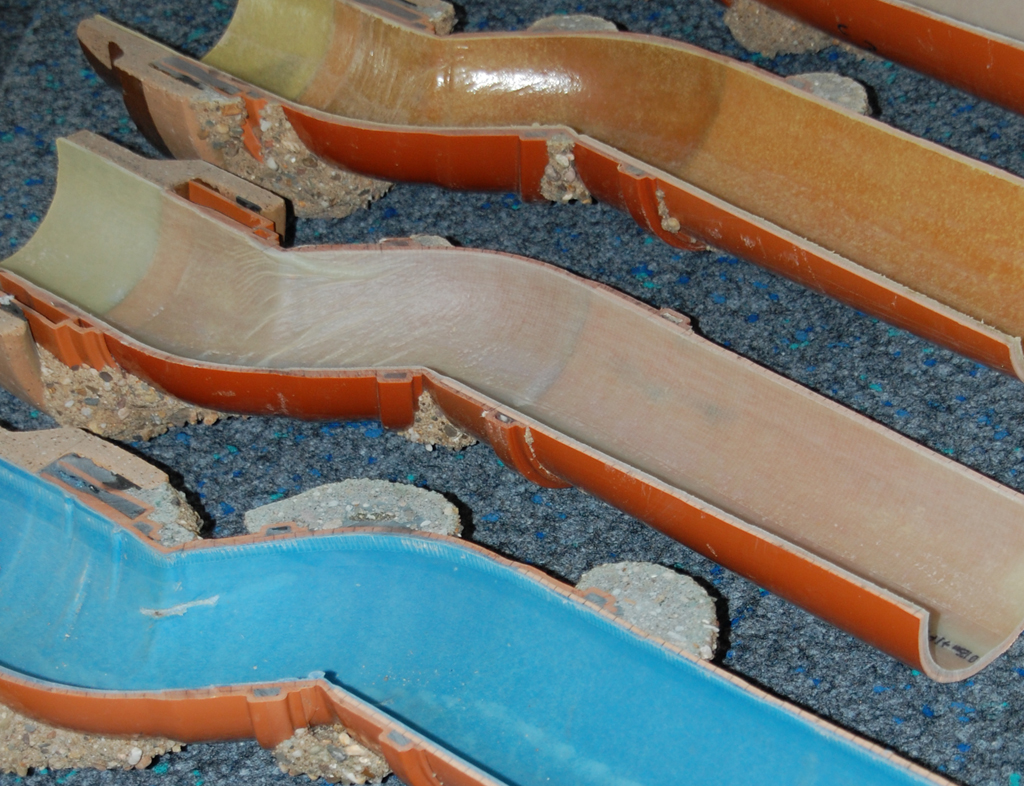
Overview: Samples from the Comparative Test, showing liners, pipe and escaped resin

Overview: Samples from the Comparative Test, showing liners, pipe and escaped resin

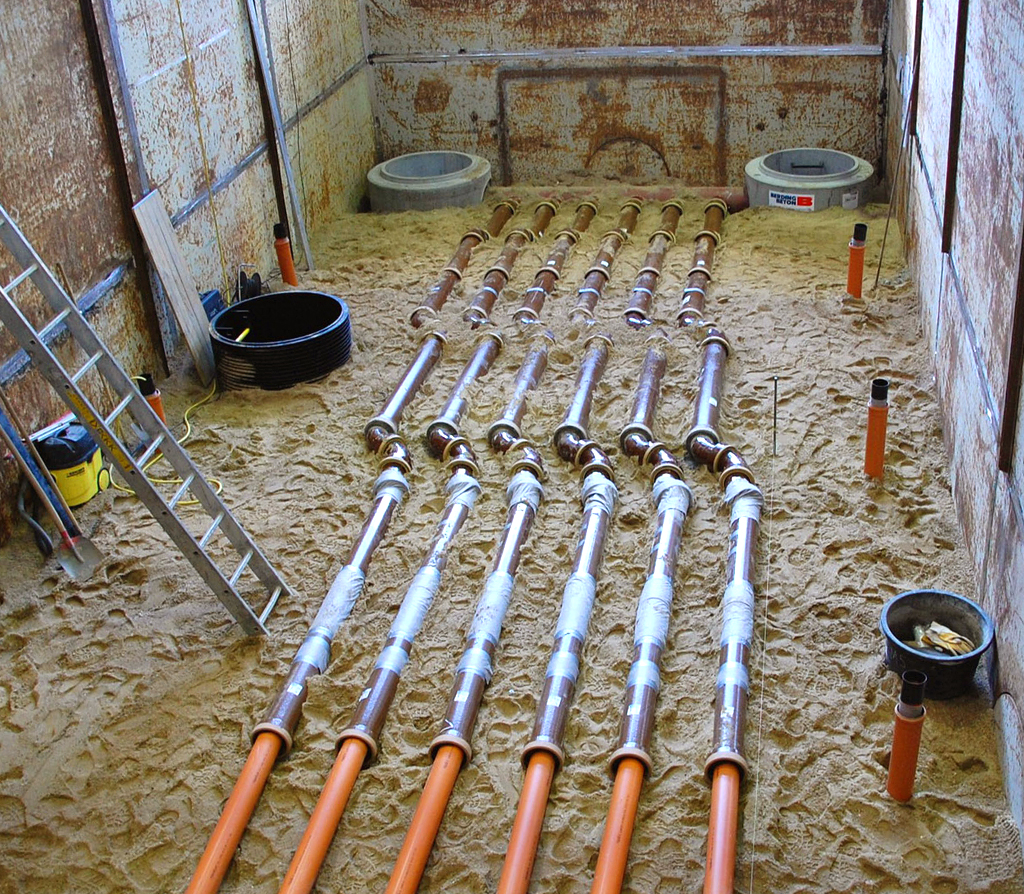
IKT has investigated the material quality and practical usability of CIPP liner products for sewer laterals in the context of an extensive programme of tests. Practically orientated tests performed in the test pipes at the IKT’s large-scale test facility were the focus of this programme. The IKT Comparative Test “Sewer lateral liners” provides drain/sewer operators with reliable and impartial information on the product properties of commercially available refurbishing procedures.

Title

Comparative testing of the quality of refurbishing methods for sewer laterals II

Downloads

(German versions only)
Table of results, “Standard situation”
Table of results, “Extreme situation”
Test report (188 pages)
Short report (34 pages)

Client

Ministry for the Environment, Agriculture, Nature Conservation and Consumer Protection of the German Federal State of NRW

Participating sewer-system operators

6 x 6 pipess: Layout of the test lengths in IKT's large-scale test facility

6 x 6 pipes: Layout of the test lengths in IKT’s large-scale test facility

  • Stadtwerke Aachen AG (municipal utilities)
  • City of Alsdorf municipal technical utilities
  • City of Bielefeld
  • Bocholt disposal and service utility
  • City of Datteln
  • City of Detmold
  • Düsseldorf urban drainage utilities
  • Stadtwerke Essen AG (municipal utilities)
  • City of Gladbeck
  • Göttingen urban drainage utility
  • City of Hilden
  • Cologne urban drainage utilities
  • City of Lemgo
  • City of Monheim-on-the-Rhine
  • Schwalmtalwerke municipal utilities
  • KOWA Vorsfelde and district water authority
  • Wuppertaler Stadtwerke AG municipal utility

Contact

Serdar Ulutaş
Dipl.-Ing. (FH), MBA

T: +49 (0) 209 17806-32
E: ulutas@ikt.de


IKT Comparative Test
“Repair methods for main sewers”

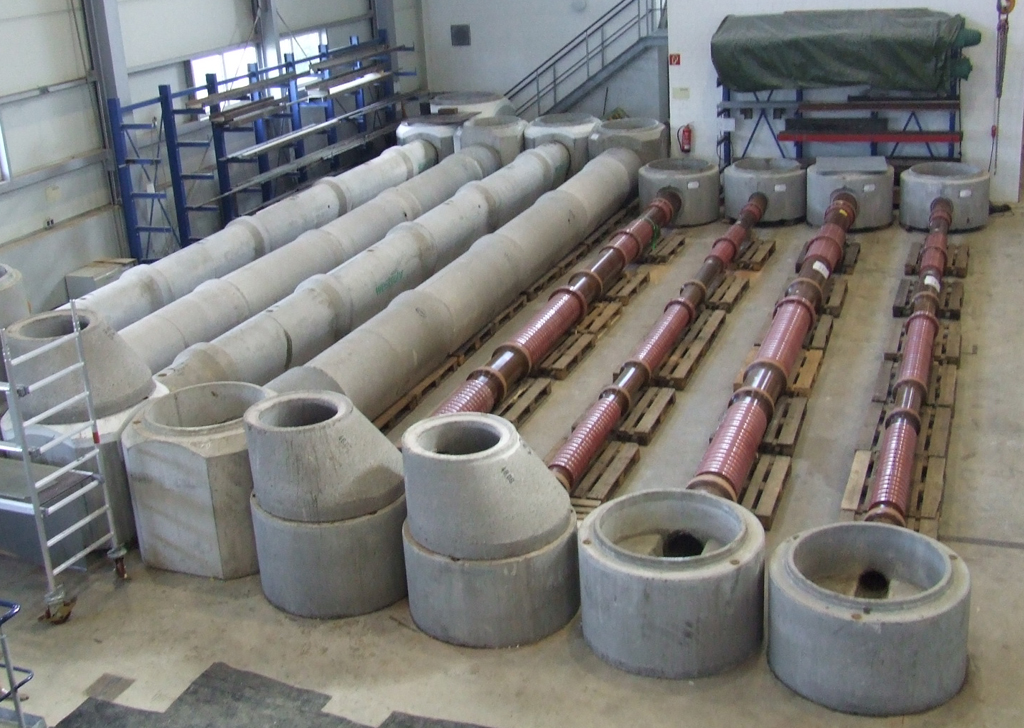
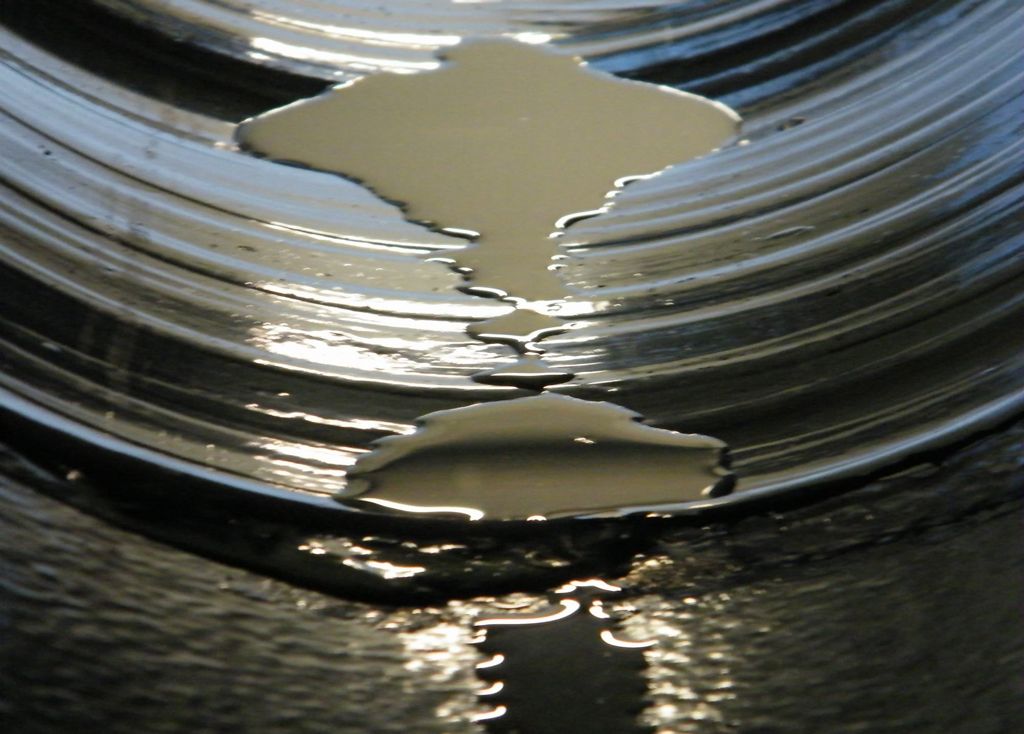
Layout of the test lengths: Pipes with built-in faults

Layout of the test lengths: Pipes with built-in faults

Many waste-water system operators are unsure of what can be achieved by main sewer repair methods and what quality is attainable. Twelve different techniques from the three groups of methods: “Injection/grouting + injection methods”, “Short-liners” and “Internal sleeves” have been comparatively tested under defined and replicable conditions using the IKT Comparative Test “Repair methods for main sewers”. The principal focus was the testing of the techniques in IKT test rigs under conditions approximating to actual practice. The IKT Comparative Test provides reliable and impartial information on the quality of the techniques tested and statements concerning the general suitability of the individual techniques and method groups

Title

IKT Comparative Test “Repair methods for main sewers (DN 200 – DN 600)”

Downloads

(German versions only)
Table of results
Test Report (155 pages)
Short report (30 pages)
Test Report “Validation of the adhesion properties of short-liners on variously pre-treated substrate surfaces and the use of selected repair methods under external water pressure” (99 pages)

Clients

  • Ministry for the Environment, Agriculture, Nature Conservation and Consumer Protection of the German Federal State of North Rhine-Westphalia
  • Environment ministry of the State of Baden-Württemberg
  • City of Dortmund waste-water utility
  • City of Willich waste-water utility
  • Troisdorf waste-water utility
  • Bergisch Gladbach waste-water utility
  • City of Bad Honnef waste-water utility
  • Castrop-Rauxel EUV municipal utility
  • Göttingen disposal utility
  • InfraStruktur Neuss
  • Munich urban drainage utility
  • City of Herford
  • City of Iserlohn
  • City of Oberhausen and WBO Wirtschaftsbetriebe Oberhausen GmbH (municipal utility)
  • City of Plettenberg
  • Düsseldorf urban drainage utility
  • Frankfurt am Main urban drainage utility
  • Hagen drainage utility (SEH)
  • Kamen urban drainage utility
  • Reutlingen urban drainage utility (SER)
  • Cologne urban drainage utilities
  • Minden municipal utilities
  • Espelkamp municipal utilities
  • Stadtwerke Essen AG municipal utility
  • Vellmar municipal utilities
  • Burscheid municipal technical utilities
  • Technische Werke Emmerich am Rhein GmbH municipal technical utilities
  • City of Marl central municipal utility

Contact

Serdar Ulutaş
Dipl.-Ing. (FH), MBA

T: +49 (0) 209 17806-32
E: ulutas@ikt.de


IKT Comparative Test
“Sewer lateral liners 2005”

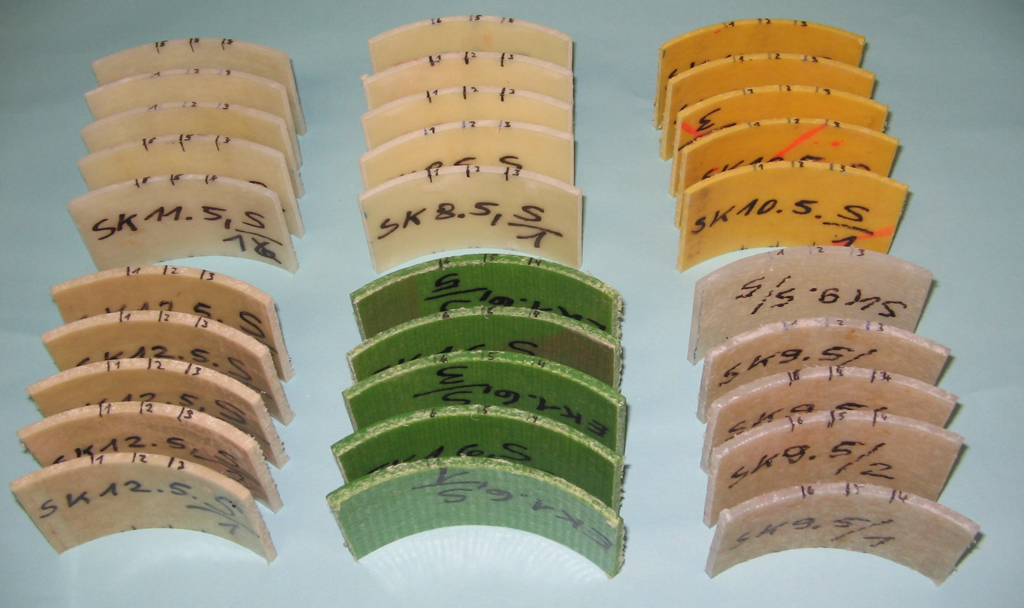
Liner fragments: Samples taken for three-point bending tests

Liner fragments: Samples taken for three-point bending tests

This IKT Comparative Test assesses the suitability and the practical usability of CIPP liners available on the market for sewer laterals. The central focus is on highly practically orientated comparison of the products, in order to be able to provide waste-water system operators with impartial and technically substantiated information on the strengths, weaknesses and potentials/limitations for use of the products tested. The test programme itself has been developed jointly with the participating system operators.

Title

IKT Comparative Test “Sewer lateral liners”

Downloads

(German versions only)
Table of results “Standard situation”
Table of result “Extreme situation”
Test Report (122 pages)
Short report (22 pages)

Clients

  • City of Alsdorf municipal waste-water management utility
  • City of Bergisch Gladbach waste-water utility
  • City of Dinslaken
  • Düsseldorf urban drainage utility
  • City of Gladbeck
  • Göttingen urban drainage utility
  • City of Hilden
  • Cologne urban drainage utilities
  • City of Neuss
  • Niederrheinische Versorgung und Verkehr AG (NVV; Lower Rhine regional supply/disposal and transport utility)
  • Stadtwerke Quickborn (municipal utility)
  • City of Recklinghausen
  • Warendorf disposal utility
  • Würzburg state civil-engineering department

with funding from the Ministry for the Environment, Agriculture, Nature Conservation and Consumer Protection of the German Federal State of North Rhine-Westphalia

Contact

Serdar Ulutaş
Dipl.-Ing. (FH), MBA

T: +49 (0) 209 17806-32
E: ulutas@ikt.de